
Eder Estructuras
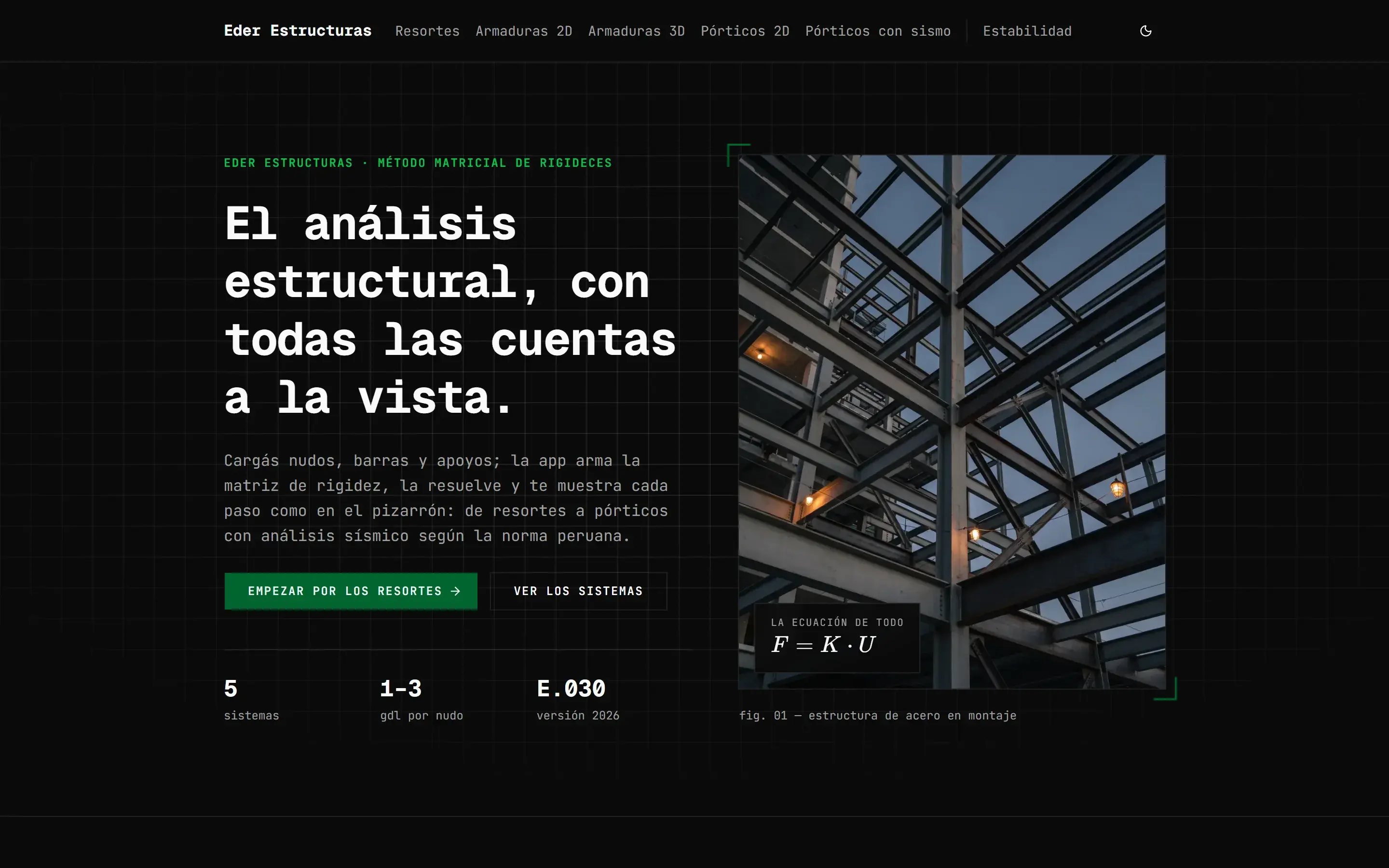
I rebuilt my thesis app from scratch: you enter nodes, members and supports, and the app assembles the stiffness matrix, solves it and shows every step like on a whiteboard, across five systems from springs to frames with seismic analysis.
- Client
- Proyecto propio, nacido de mi tesis
- My role
- Everything: engineering, design, development and deployment
- Period
- August – October 2026, in production
5
systems, from springs to seismic frames
608
tests (the original had none)
139
commits in 10 weeks
The problem
The thesis version worked, but it was the same algorithm written five times by hand, with different names for the same things, not a single test and a full 3D scene to draw flat drawings.
And some results weren't what they seemed: in the seismic analysis the 1.4 and 1.7 factors never entered the calculation, and the "envelope" compared against a single number and was never drawn.
What I built
One engine for all five systems
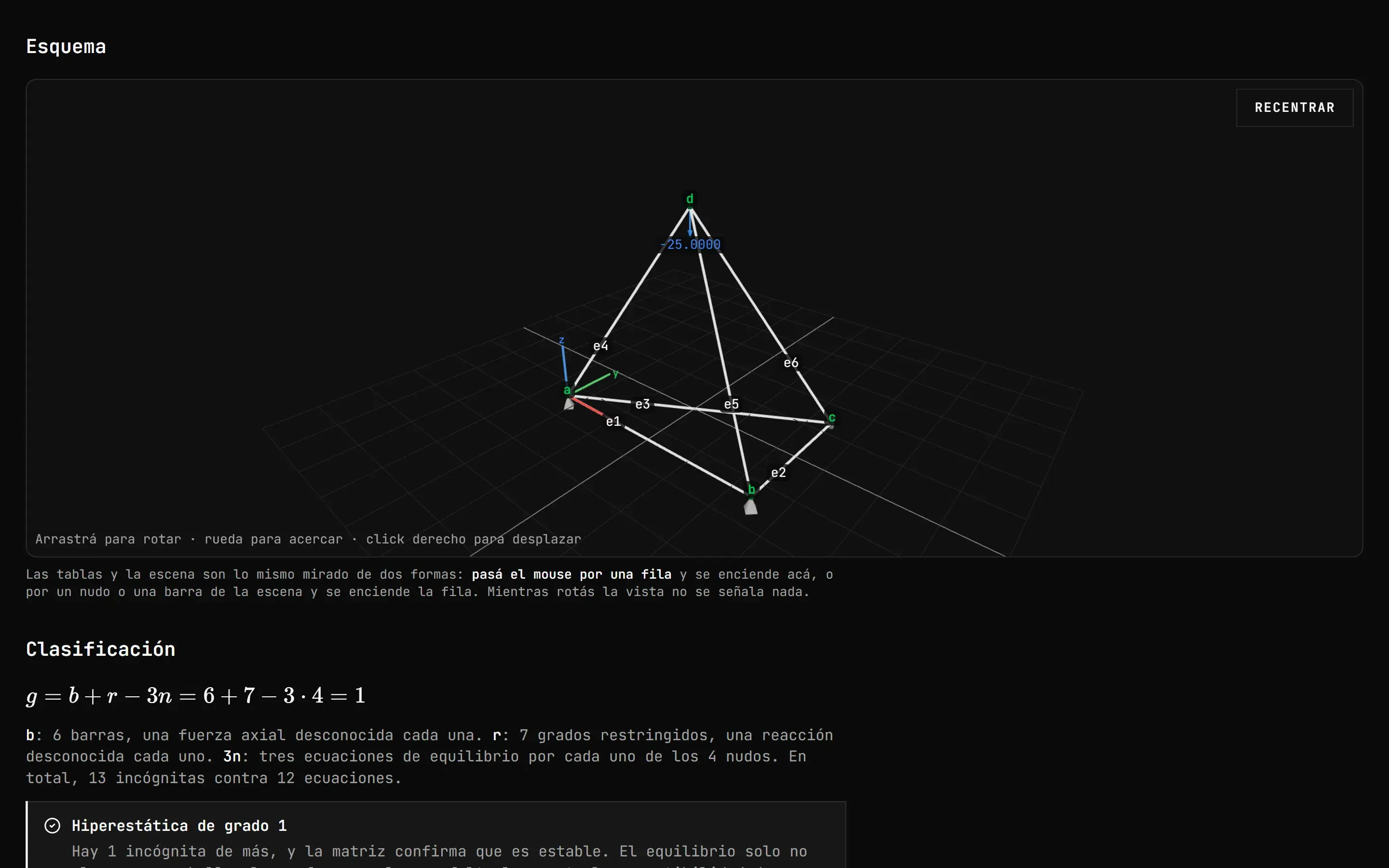
Springs, plane and space trusses, frames and seismic frames share one pure, tested engine: the only things that change are each element's stiffness and the degrees of freedom per node.
Every step, like on a whiteboard
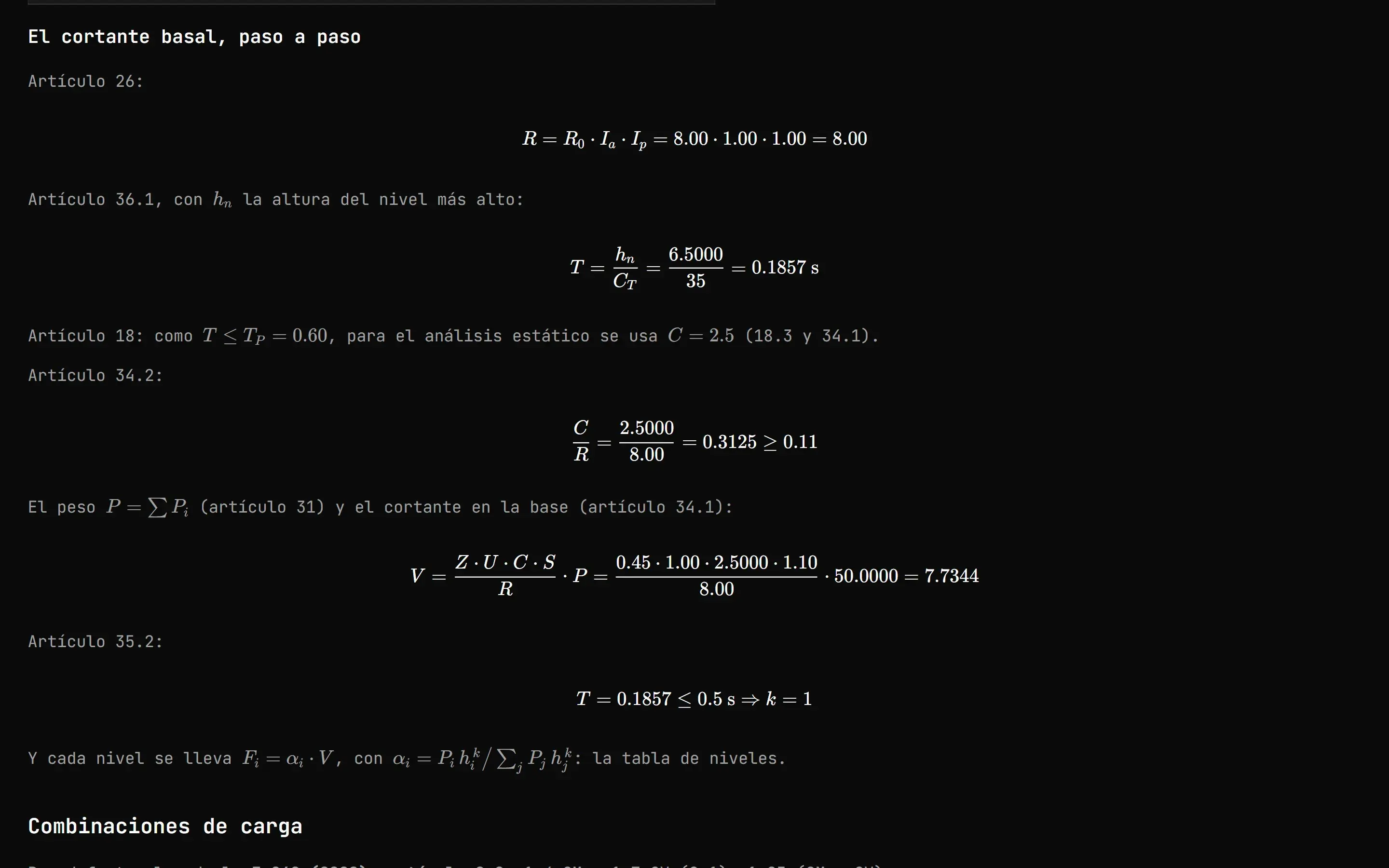
Assembly, partitioning, solution, internal forces and an equilibrium check, written in KaTeX. With preloaded examples, a practice mode to work out a block by hand and the structure's classification cross-checked against the matrix.
Seismic analysis under the Peruvian code
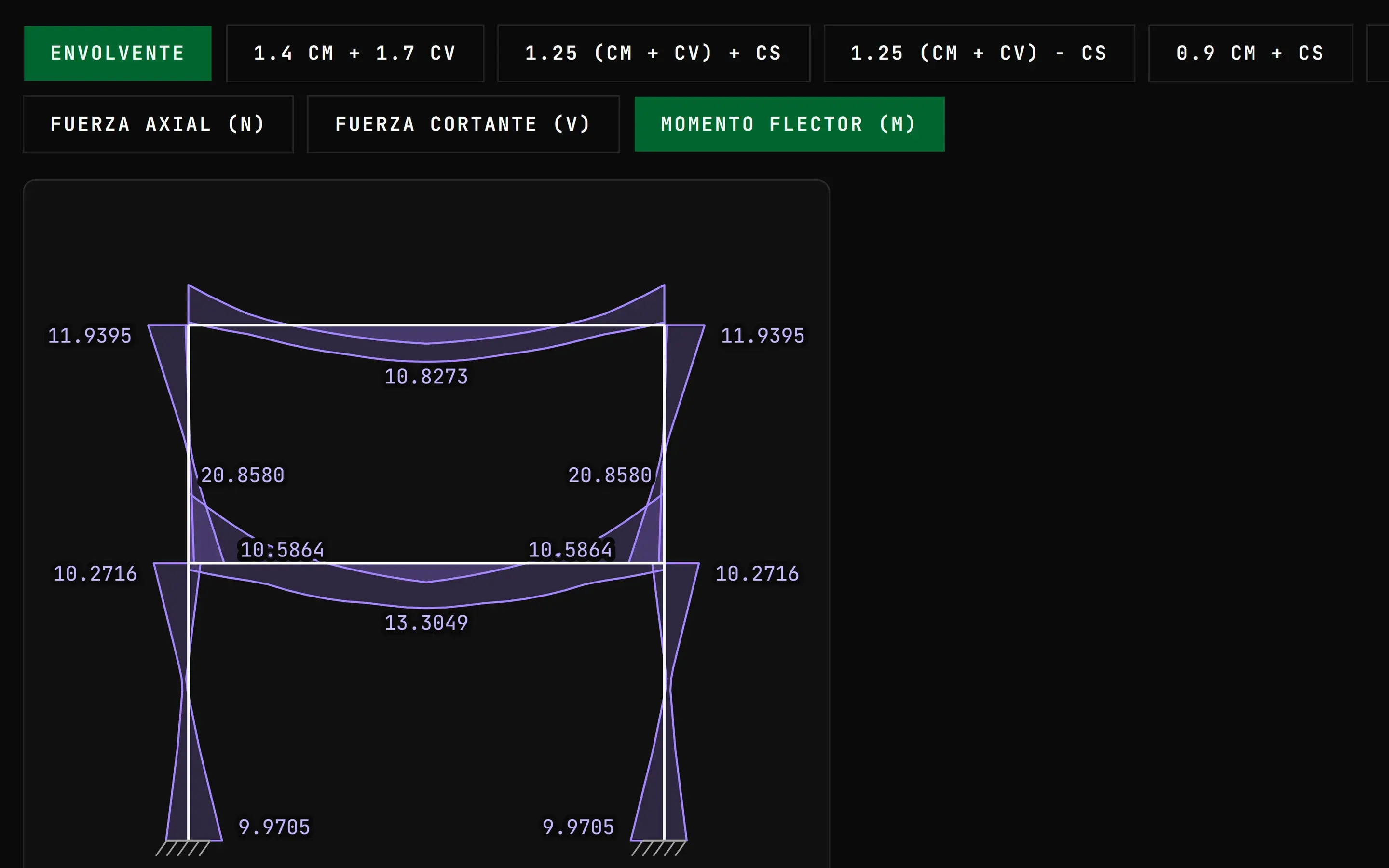
The E.030 2026 and E.060 codes, read from the official PDFs: base shear article by article, rigid diaphragm, lateral stiffness by condensation, drifts, editable load combinations and a drawn envelope.
Exact diagrams and a live Excel export
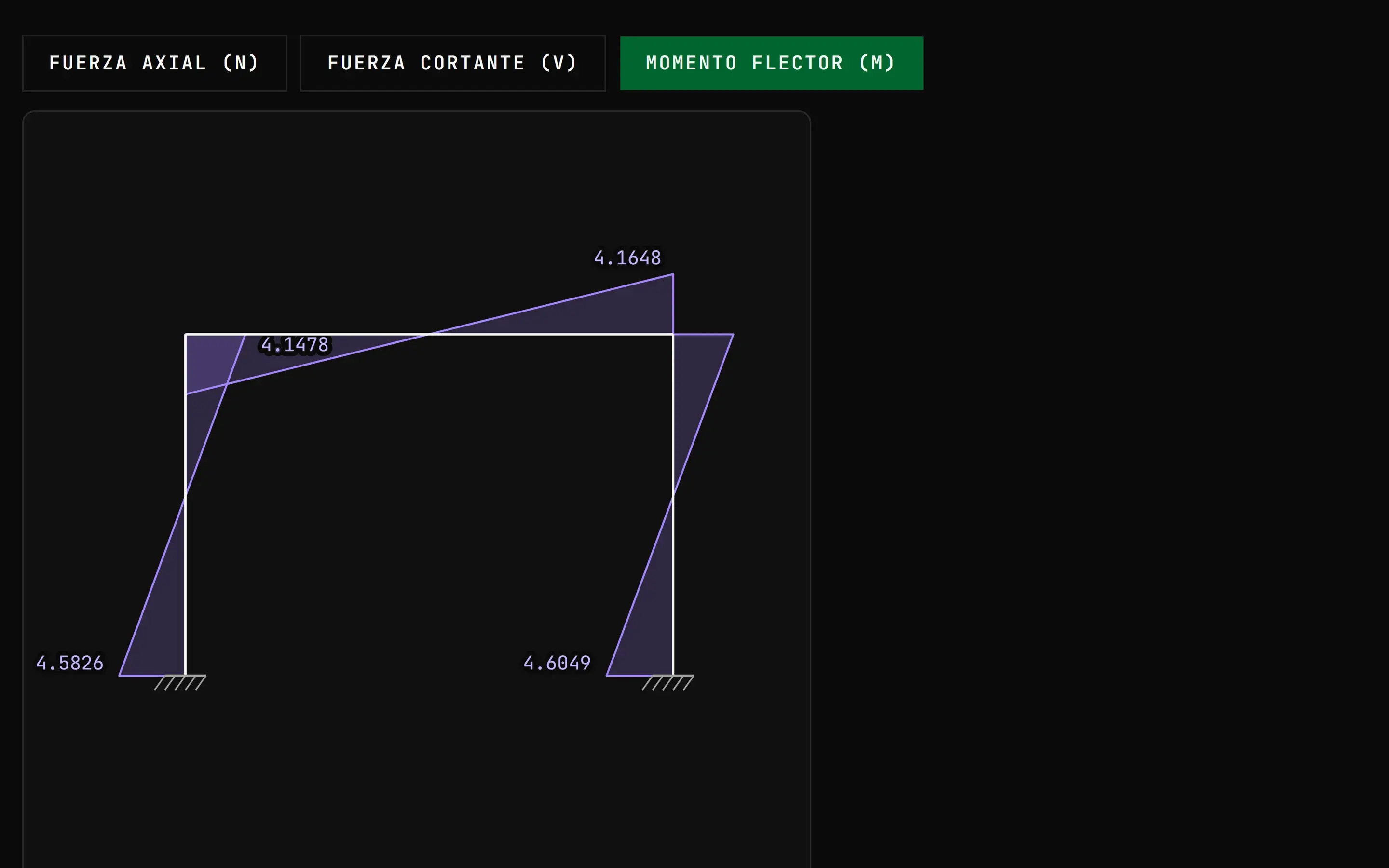
N, V and M diagrams and the deflected shape computed by statics, with no numerical integration. Each system exports an Excel workbook with the method built in formulas: change one value and everything recalculates.
Built with
What it looks like
What came next
The thesis version is still online for comparison. Next up: temperature changes, fabrication errors and inclined supports, plus theory content linked from each system.
The code, public on GitHubDoes your company need something like this?
Message me on WhatsApp